
Goreme Open Air Museum: A Heritage Pairing with Derinkuyu
Independent guide; not the museum operator or an official ticket seller.
Plan Goreme Open Air Museum as a distinct church and heritage visit, with entry, separate areas, photography and route checks.
Last updated October 2026
Contents9
Goreme Open Air Museum is a named rock-cut church and monastic-space museum. It is different from Göreme town, the wider UNESCO landscape and Derinkuyu's underground route. Choose it for its religious spaces and art, then check the exact entry and church access for your visit.
Plan Göreme Open Air Museum as a separate admission and route. The Ministry names several churches within its account. A main museum visit and access to a separately ticketed area may have different terms. Check the current category, photography rules and route before combining it with Derinkuyu.
Goreme Open Air Museum versus the wider landscape
The Ministry's museum record names the venue at Müze Caddesi in Göreme. Its address points to the museum ticket desk. Source checked October 2026. A map pin for the town centre is not the same arrival point.
UNESCO's Cappadocia record supplies the wider heritage context. Its title and boundary do not make the region one museum. Derinkuyu and Kaymaklı have separate entry and route records. A ticket for a church museum should not be assumed to cover an underground city.
The familiar national-park name also needs care. Its historical designation changed, while UNESCO's title retains the term. For the actual visit, the named venue record is more useful than a general park label. It tells you which museum is being discussed and where to begin the access check.
Churches and what to see
The Ministry lists religious spaces including Tokalı and Karanlık churches. It describes geometric decoration and later paintings with Christian scenes. This gives a source for the museum's reading. It does not mean every painted room shares the same date or every church has identical access terms.
Read a church label with its room location and source. A dated art study can concern a painting phase rather than the first cutting of the chamber. A later decoration could belong to an older space. That distinction makes the religious-history account clearer and prevents one date from spreading to every feature.
The museum also includes spaces associated with life around the churches. Their proposed uses belong to its room account. A photo of a carved room should not be labelled a dining room or chapel unless the feature can be matched. A general view is still useful without a more precise claim than its evidence permits.
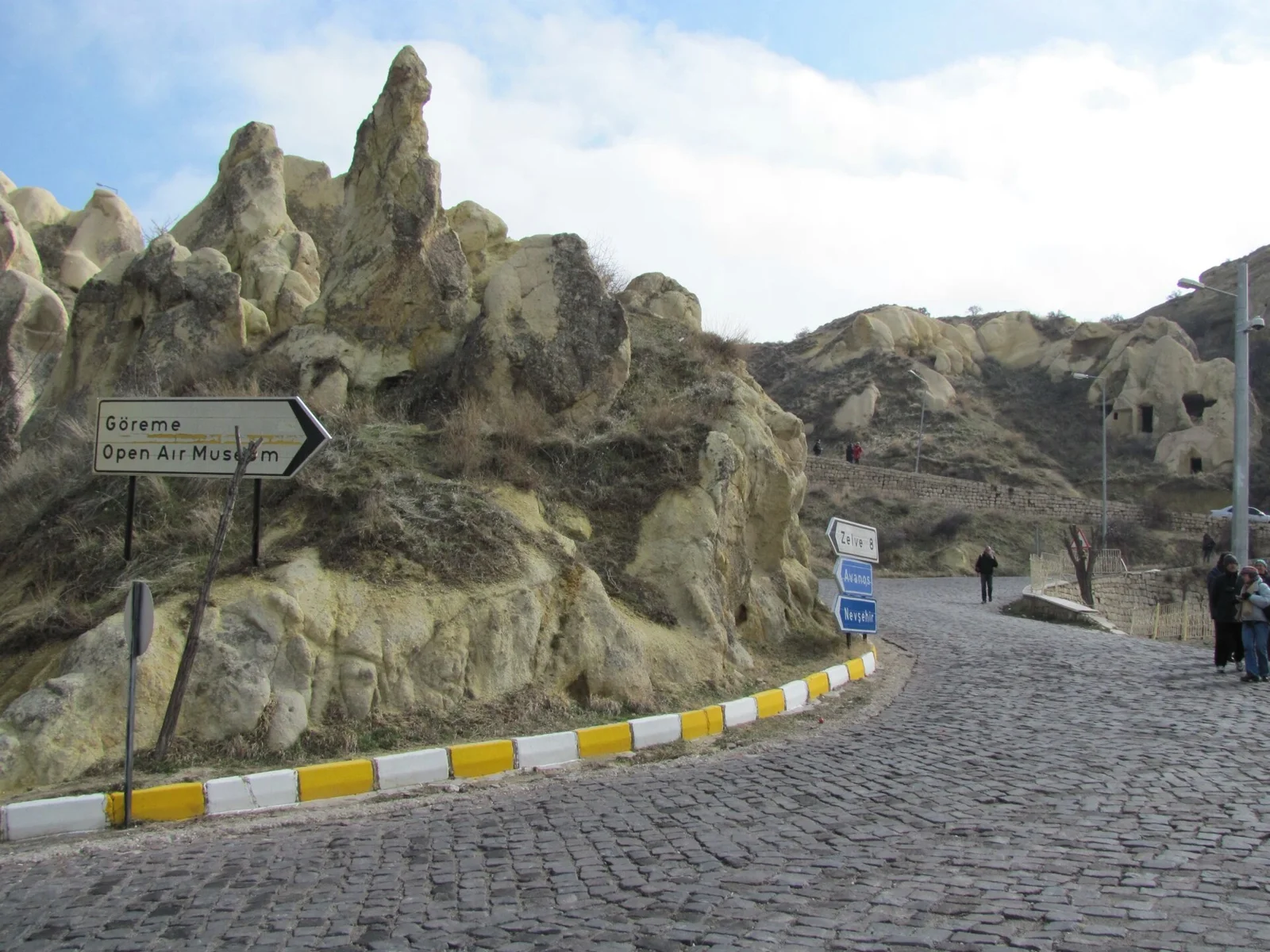
The hero shows a pictured approach to the museum, with creator and licence below it. It is a dated view, not a current queue forecast. Its capture date should not be confused with the date on which the venue's operating facts were checked.
Entry and separate-ticket areas
Ask for the current main-entry category and any additional church admission. The Ministry's published fee rules name Karanlık Church as an exception to ordinary MüzeKart coverage requiring a separate ticket. That is a programme-specific rule. It should not be shortened into a promise about every foreign-visitor pass or package.
If buying a tour, ask whether its museum entry includes the area you want. A supplier may name Göreme museum while describing only the main admission. A broad “all tickets” statement should be checked against the actual inclusion list. A separately priced area can change the budget even when transport and guiding are clear.
This guide does not give an unchecked current fee. Use the venue and the exact ticket product for your category and date. A price quoted in an older currency should not silently replace the current record. Nor should a museum fee be treated as the price of a guided transfer from your hotel.
Entry checklist
- Main museum category and the currency quoted.
- Any named church requiring an additional entry.
- Exact pass and its stated exclusions.
- Supplier's written inclusion list, if joining a tour.
- Current route and any rooms temporarily outside it.
These checks concern different products. Keeping them separate avoids a common mismatch: a tour has supplied the named museum stop, but not the extra church entry you expected. Resolve that before choosing the booking, rather than infer it from the tour title.
Photography and physical constraints
Check the posted photography rules in each space and follow staff directions. This guide has not confirmed one rule covering every church interior for all dates. A general statement that photos are allowed outdoors should not become permission to photo every painting inside.
Ask about steps, narrow entrances and the current route if these affect your group. An open-air museum is not a promise of a flat or unrestricted walk. A photo may show a broad exterior while hiding the approach to a given room. Use a venue-specific answer for the feature which matters to you.
Keep the route clear when stopping to read a sign or take a picture. Do not touch paintings or cross access barriers. A closed room may still appear in a brochure or an older photo. The current sign and staff direction take precedence over that historical record.
Combining the museum with Derinkuyu
The two visits offer different contexts. Göreme's museum focuses on the religious rock-cut setting. Derinkuyu focuses on its underground spaces and the museum's refuge account. That makes a pairing useful if those are both interests, but it still needs separate entry and transport checks.
Choose the order only after resolving current hours. A late underground return should not be assumed to fit a surface museum's final admission. If a multi-stop tour includes both, ask for the actual sequence and the time allowed. A combined title can hide a very brief stop at one place.
Do not assume a Red Tour names this museum. One supplier's overview may name Göreme while its detailed route names Zelve. Those are different venues. Read the current itinerary and ask the supplier to settle the exact museum in writing before relying on it.
If your day is tight, give one museum the main block and keep the second optional. This is a planning choice, not a claim about typical crowd levels. A well-paced single visit can be more useful than two stops which depend on the shortest possible transfer and an uncertain closing time.
Current facts and source checks
The Ministry record shows daytime hours of 08:00 to 17:45, with the ticket desk closing at 17:15. Its night-museum schedule runs from 18:00 to 23:00, with the desk closing at 22:30. Checked October 2026. Do not treat either listing as a promise for every future date or plan to arrive at the last minute.
Ask the venue about the schedule for your date and the exact entry product. Night-museum terms may differ from daytime pass coverage. The fact that a night schedule appears on a current page does not show a year-round service. Keep the operating question separate from the museum's long historical account.
UNESCO supplies regional context; the venue supplies its own room and operating account. The fee rules supply a programme exclusion. Each source answers a different part of the visit. None should be made to prove every fact simply because it is official.
FAQ: museum questions
Is this the whole Göreme heritage landscape? No. It is a named museum within a wider property and region. Other museums and walks need their own plans.
Does one museum ticket automatically include every church? Check the exact ticket and pass. Karanlık Church has programme-specific separate-entry rules in the Ministry record.
Does a Red Tour always visit Göreme museum? No universal itinerary is shown here. Use the supplier's detailed named stop, not its colour alone.
Continue planning your visit
Verdict on Goreme Open Air Museum
Choose Goreme Open Air Museum for its own rock-cut religious setting, and treat entry and church access as specific products. Pair it with Derinkuyu only after the two routes and schedules are checked. The wider heritage name is context, not a combined ticket.