
Cappadocia Turkey History: Context for Derinkuyu
Independent guide; not the museum operator or an official ticket seller.
Place Derinkuyu in Cappadocia's regional history, with clear notes on settlement, refuge use and site dates.
Last updated October 2026
Contents8
- Cappadocia history in Turkey and its changing boundaries
- Settlement and rock-cut spaces
- Byzantine communities and refuge use
- Later occupation and population change
- Cappadocia history in Turkey: where Derinkuyu fits
- Evidence and unresolved dates
- Continue planning your visit
- Verdict on Cappadocia Turkey history
Cappadocia history in Turkey is the setting for Derinkuyu, rather than a single date for all its rooms. The region has a long rock-cut tradition. The evidence for a church, a home and a refuge can differ. This guide keeps the regional story separate from the evidence at one site.
The useful starting point: Cappadocia's history includes rock-cut homes, churches and places of refuge across a wide region. A regional date does not date a room at Derinkuyu. Read the landscape's history first, then ask what evidence belongs to this particular underground site.
Cappadocia history in Turkey and its changing boundaries
For this guide, Cappadocia means the central Anatolian setting of Derinkuyu and the nearby rock sites. It is not a claim that every historic use of the name covered the same ground. A travel map, an ancient province and a heritage property serve different purposes. Their borders should not be treated as one fixed outline.
UNESCO's World Heritage record includes Göreme's rock sites and the underground cities of Kaymaklı and Derinkuyu. This gives a clear frame for the places discussed here. It does not make the whole region one museum or one continuous underground settlement. Source checked October 2026.
Settlement and rock-cut spaces
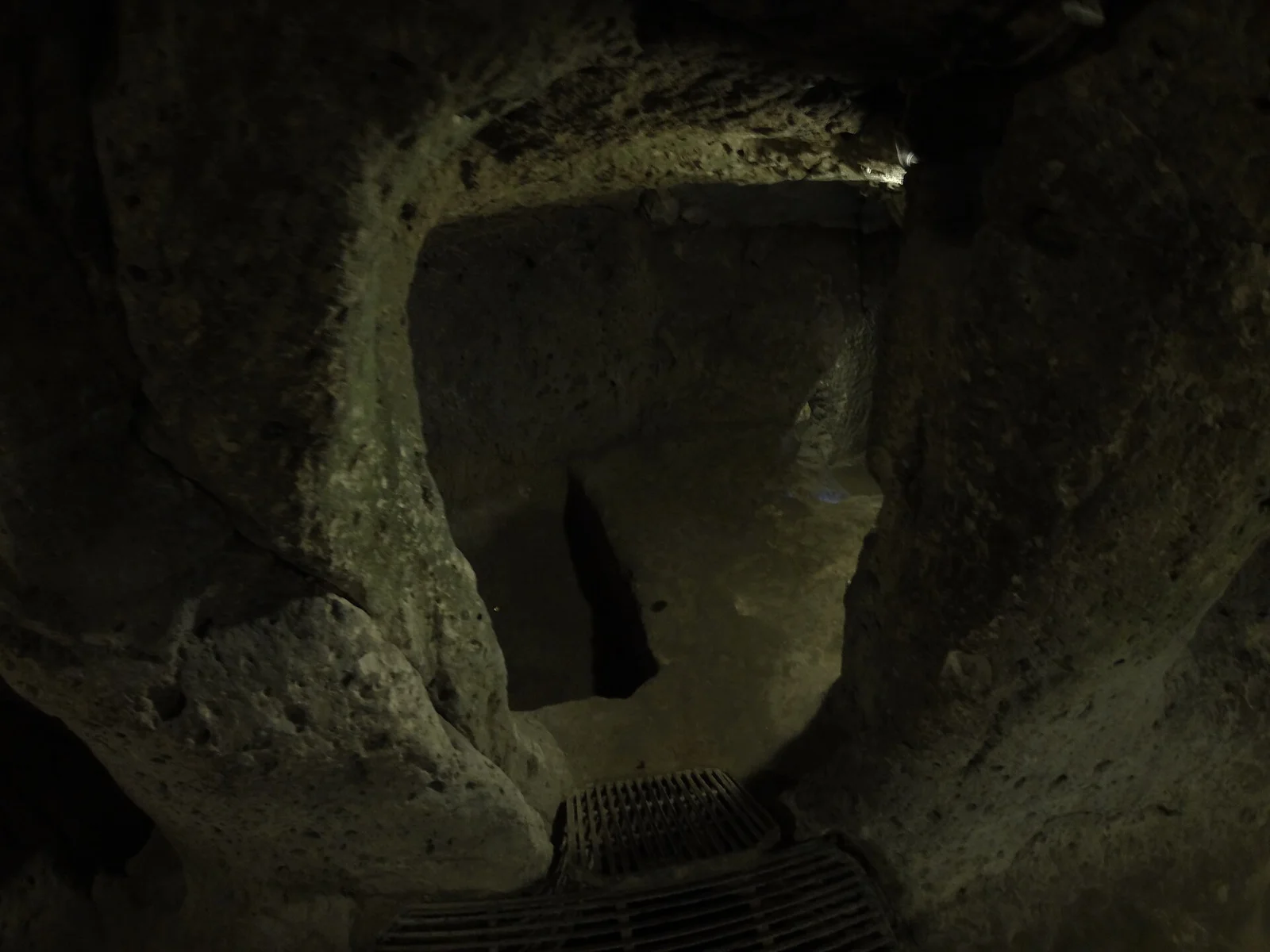
Rock-cut architecture starts with material being removed. A room's walls can be the rock left behind, rather than blocks laid in rows. That makes the age of the natural rock quite different from the age of the room. An old rock layer does not show when a doorway was cut into it.
It also helps explain why a room may hold more than one story. A later group could alter an opening or reuse a space. A visible tool mark might relate to that change rather than to the first phase. Dating the whole site needs more than a photograph of the wall.
Byzantine communities and refuge use
UNESCO places the region's monastic tradition in a late antique and Byzantine context. It also describes underground towns as places of refuge. Those are regional interpretations. They help explain why churches, homes and spaces below ground belong in the same historical discussion. They do not identify the builders of every chamber.
The evidence differs by feature. A painted church may have a style that can be compared with other dated art. A bare storage room may lack such a clue. A door's shape alone does not settle its age. When a guide gives one date for all these spaces, ask which feature was actually dated.
Later occupation and population change
There is a major documented change in the modern region's history. The 1923 population-exchange convention required an exchange defined by nationality and religion, with stated exceptions. It provides a primary record of that policy. It is not a register of the last users of Derinkuyu's rooms.
Keep those scales apart. A regional change can affect the people who know or maintain a place. It does not, on its own, prove the exact day that a tunnel stopped being used. Local records would be needed to make that link.
Cappadocia history in Turkey: where Derinkuyu fits
| Historical question | Useful evidence | What it cannot settle alone |
|---|---|---|
| Why were underground refuges used? | Regional history and site interpretation | The date of each cut room |
| When was a church decorated? | A dated study of the art and its context | The age of nearby bare passages |
| Who used a room last? | A local record or documented find | Every earlier period of use |
| When did the museum open? | Museum records | The first occupation of the site |
Scroll for more →
These distinctions matter on a visit. A guide can point out a room's proposed use while being clear about its uncertain date. That is a more useful explanation than a timeline which gives every feature the same origin.
Evidence and unresolved dates
For the site itself, begin with the Ministry's Derinkuyu museum account. Treat its historical account as the museum's interpretation. A firm room-by-room chronology would need an original study with the finds, contexts and dating method set out.
Ask as you read: Is this date about the region, this site, a room, an object or the modern museum? Keeping that one question in mind prevents many false links between quite different kinds of evidence.
Continue planning your visit
Verdict on Cappadocia Turkey history
Cappadocia history in Turkey explains the setting in which Derinkuyu was used. It does not provide a single proven construction date for the whole underground complex. Use it as context, then read the site-specific evidence before accepting a more precise claim.