
Derinkuyu History: Chronology, Builders and Uncertain Dates
Independent guide; not the museum operator or an official ticket seller.
Separate Derinkuyu origins, later refuge use, room interpretation and modern visitor access through named sources.
Last updated October 2026
Contents8
Derinkuyu history is a story of use and change. It is not one building date. The rock-cut rooms belong to a wider Cappadocian tradition of shelter below ground. The museum and UNESCO describe refuge use. But their summaries do not show the first cut in every room.
Separate the earliest cutting, later enlargement and modern museum opening. A room used by Christians does not date the whole network. A claimed ancient headcount is not a census. Use the museum for its room account and primary field work for the rock and measured spaces. Treat a precise first-builder story as unconfirmed unless its evidence is named.
Derinkuyu history in the local record
UNESCO's account places Derinkuyu and Kaymaklı within the rock sites of Cappadocia. It links underground refuge with the history of Christian settlement in the region. That gives a recorded local setting, while leaving room-clear dates as a different question.
The Ministry's Derinkuyu page discusses early inhabitants and later Christian shelter. It names spaces for food, water and worship. Its short text explains how the museum reads the site. It is not an excavation report that dates each wall and doorway.
Builders, users and later additions
One group could cut a small space. Another could make it larger later. A later group could add a passage or close a door. It could also give a room a new use. A long-lived refuge can therefore contain evidence from more than one time.
For a date claim, ask what was dated. An object found in a room can have its own date. That may not be the date when the room was cut. Rock formation dates describe the material, not the date people hollowed it. A volcanic layer can be ancient while a room cut into it is much later.
That distinction is central at Derinkuyu. Mehmet Özgür Mutlu's study of the two sites examines rock layers and the relationship of cracks to room walls. It helps explain the rock. It does not make every visitor-history claim a dated field fact.
Refuge use and daily needs
The museum describes stores, wells, air shafts and narrow room links. Those are useful parts of a refuge account. They address needs that do not disappear when people go below ground: food must be kept, water obtained and movement controlled.
A church or school label describes how a space was used. It should be attributed to the museum account rather than assigned from a photo's appearance. A large room without an named plan location is not enough to prove a given use.
Large capacity figures are often repeated as if they count actual residents. We do not use them that way. A capacity estimate needs to say how much space it counts. It also needs to state the length of stay and the supply and air needs. Even a plausible shelter capacity would not prove that many people occupied every part at once.
Modern opening versus rediscovery
The official brochure states a modern museum-opening year. That is distinct from a story about a household finding a passage, and from the ancient origin of the site. A modern opening does not mean the whole network was unknown to local people until then.
This page does not assert a precise rediscovery scene without an identifiable original account. A wall-breaking story needs its own original record. Several travel pages repeating it do not give it that proof. Follow the source trail before repeating names, dates or details of a supposed first discovery.
Reading the history during a visit
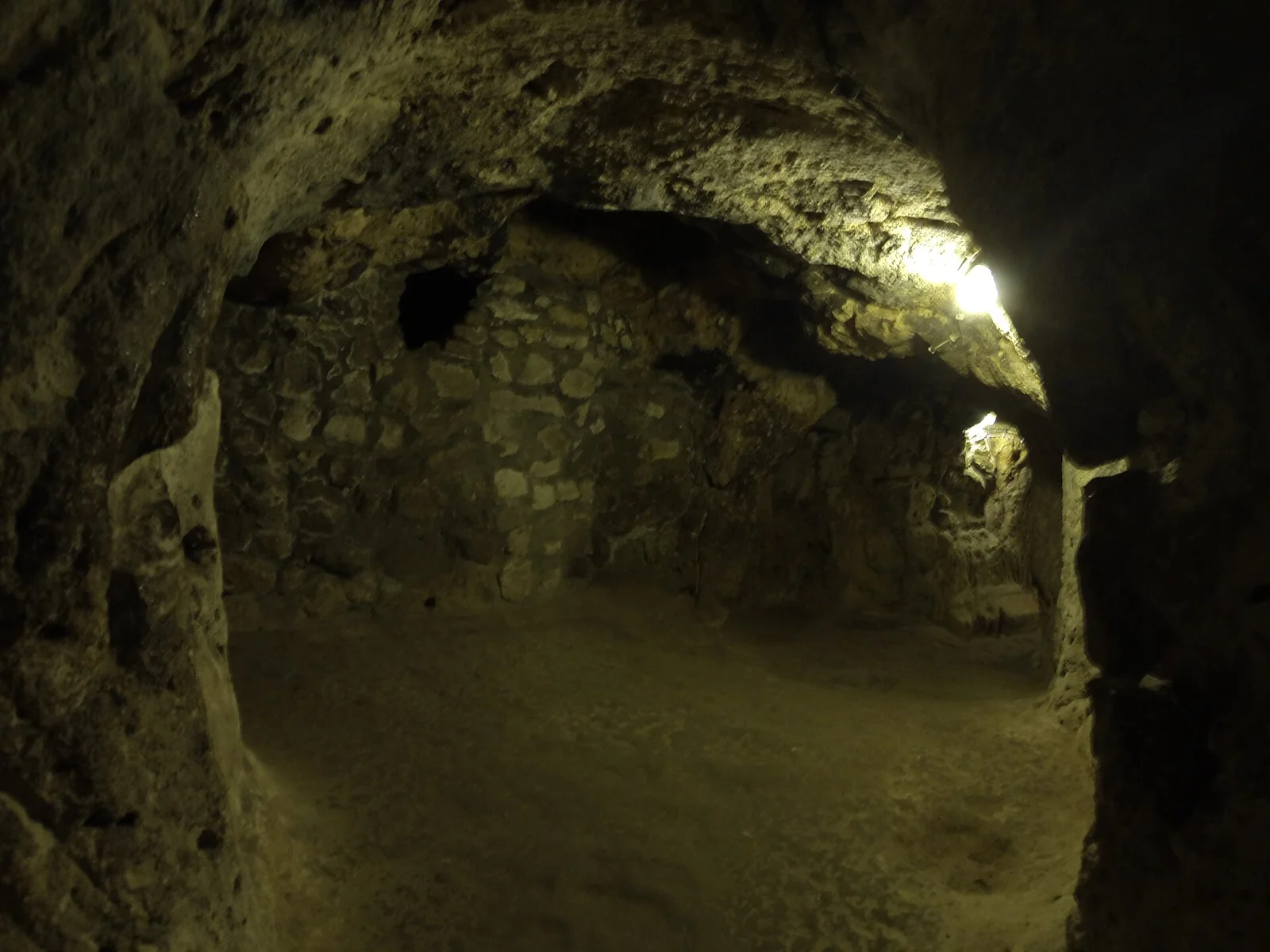
Use the route to notice relationships: a narrow passage leading to a room, a stone barrier beside an opening and a shaft joining spaces vertically. Those visible forms can help you understand the museum's account without needing to accept every dramatic claim.
Modern lights and rails belong to today's visitor route. They cannot show ancient lighting or an original movement pattern. Keep those additions separate when reading a photo or listening to a room explanation.
Frequently asked questions
Is there one confirmed date for the whole city?
No single date for every cut and addition is established by the sources used here. The museum and UNESCO describe different parts of a long history. A first building date needs a clear field basis. Do not substitute the age of volcanic rock or a later room use for that evidence.
Does a refuge mean people always lived underground?
The refuge account does not prove full-time residence in every room. It describes shelter use and facilities that could meet daily needs below ground. How long a group stayed is another question. A store, kitchen or well alone does not show continuous use or a fixed ancient headcount.
Continue planning your visit
Verdict on Derinkuyu history
Read Derinkuyu history through separate layers of evidence: local refuge use, museum room account, field rock and modern visitor access. A neat origin story should not erase those differences. Sources checked and editorial update: 14 October 2026.