
Derinkuyu Population: Capacity Estimates Explained
Independent guide; not the museum operator or an official ticket seller.
Separate Derinkuyu refuge-capacity estimates from an ancient population count, with the space and supply assumptions explained.
Last updated October 2026
Contents9
Derinkuyu population figures often ask how many could shelter there. That is not a count of ancient residents. The museum describes spaces able to serve a large group, while research and travel accounts can use different numbers. A total needs a source and a method. Then check whether it counts people who were there or models room for them.
Separate room for people from evidence that those people were present. Capacity depends on the area counted, length of stay, food, water and air. A large refuge estimate does not prove full-time residence in every room. This guide does not present a fixed ancient headcount or turn a research summary into a current visitor limit.
Derinkuyu population or refuge shelter space?
Population means people who actually lived in a place at a given time. Refuge shelter space asks how many could shelter under stated conditions. Those are different questions. A site might be used by different groups in different periods without one full-time number applying to all of them.
The Ministry's visitor account describes facilities for a large group. That supports reading the site as more than a single room. It does not supply a census listing the people who occupied each part during one event.
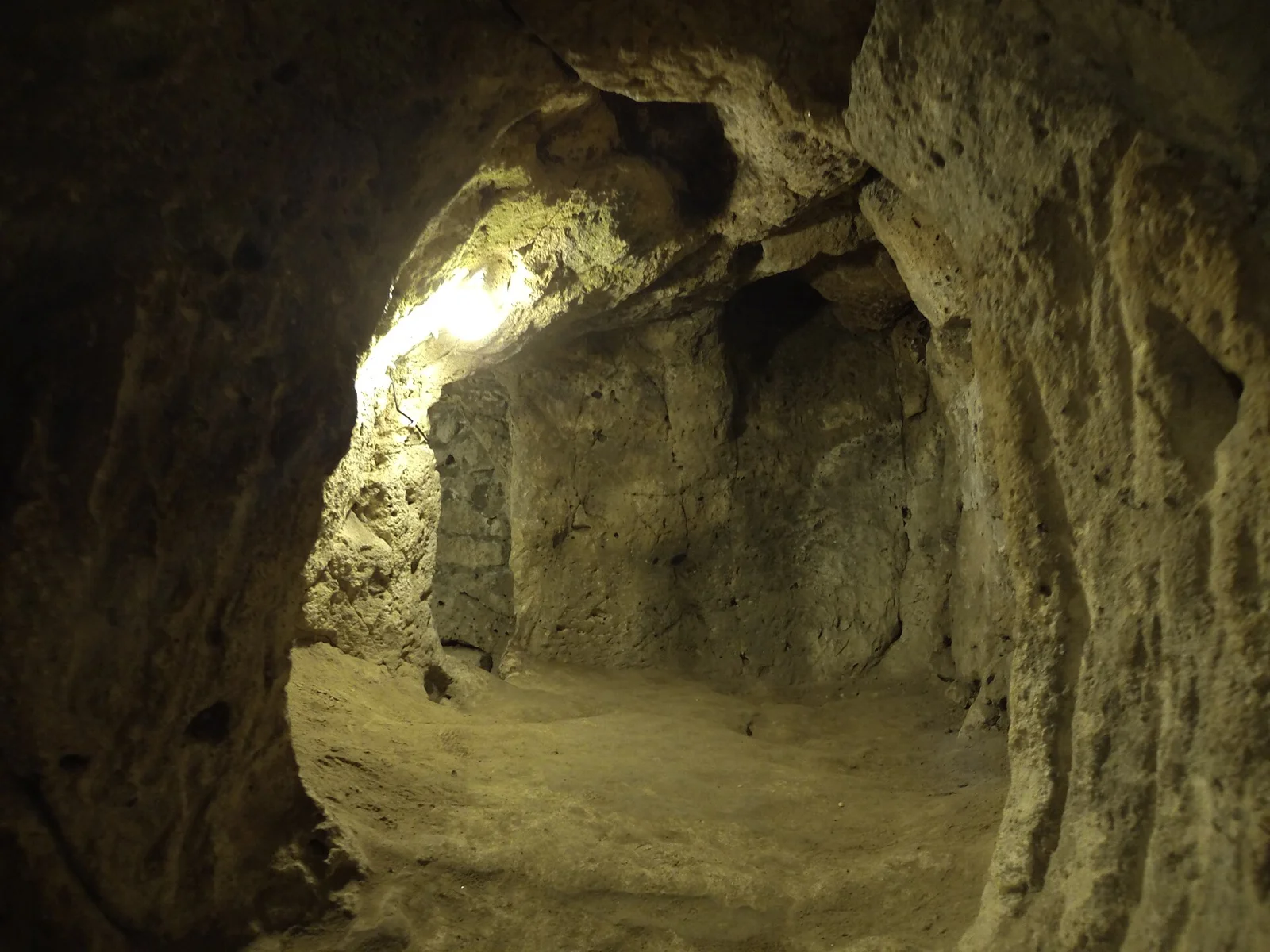
The same limit applies to photographs. A large room can show space. But not the number of people who once used it. A picture taken on a crowded modern day also does not establish ancient shelter shelter space.
Where the estimates come from
The Japanese Derinkuyu project record describes studies of the layout and site conditions. Its abstract discusses presumed accommodation and a model of the site. That is a research account of shelter space and conditions, rather than an ancient headcount record.
We do not use a short abstract as if it publishes every input to that model. A precise estimate needs the full method: which spaces were counted, what activities used them and how long the people were expected to remain. Without that, a number can sound more exact than its basis.
Travel pages may repeat a total without retaining those details. Repetition can show that a claim is widespread; it does not add an independent measurement. When several pages use the same figure, look for the original record rather than treating each repetition as new proof.
Space, supplies and length of stay
Area counted
A complete site network and a museum's visitor path are not the same area. Some rooms may have been for storage, worship or other tasks. Counting every void as sleeping space would make an estimate hard to defend. A source should explain how it divides the space.
A floor plan can help identify the rooms it records. But it has a scope. It may not show the whole network, and it may include inaccessible spaces. Do not multiply a single room's size by an imagined total to create a population estimate.
Water and food
The museum describes wells and stores among the site's facilities. Those features make sense in a refuge. Their presence does not tell us the volume available in every period, or how it matched a given crowd's needs.
Length of stay changes the question. A brief refuge and a long stay need different supply arrangements. A source should state that length of stay before calling a shelter space estimate a lived population. We do not invent water consumption or stored-food totals to make a popular number work.
Air and activity
Air shafts are another part of the museum's account. An engineering shelter space model would need their relevant conditions, rather than merely a photograph of an opening. Different activities can also use rooms differently. The total should explain those assumptions.
This does not mean the site could hold no one. Unknown inputs are not zero. It means the exact figure needs a clear basis. A responsible account can describe large-group refuge use without pretending to know a precise crowd on every occasion.
Why an estimate is not a census
An estimate can answer a what-if question, such as what the surveyed spaces might accommodate under a model. A census or a dated record answers who was present. A model is not a record of an event. A whole-number result does not change that.
Ancient use can also change over time. A later room addition could increase space, while damage or a closed link could reduce what a group used. One total for all the site's history would hide those changes. It needs its own proof.
For a headcount claim, ask for the event and source. Check the period it concerns. Then check whether it counts people in a record, models shelter space or reports modern visits. Those questions make a large figure easier to assess than asking only whether it sounds plausible.
What can be stated responsibly
The museum describes a refuge with rooms and facilities for a large group. UNESCO places Derinkuyu within the region's underground refuge history. Those statements give a useful account of function without a fixed ancient population.
Where a source supplies a shelter space estimate, name it as that source's estimate. Keep its area and conditions if available. Do not shorten the wording to “people lived here” unless the source actually records use at the time being discussed.
The UNESCO heritage account gives regional context, not a room-by-room census. A church label gives a use of space, not a count of a congregation. A store label gives another use, not a full record of supplies.
Reading shelter space claims during a visit
Look for the parts that made shelter possible: room links, barriers and facilities for daily needs. Ask a guide what source supports any clear crowd estimate. An answer that identifies the survey and its scope is more useful than repeating a large number.
Keep the modern visitor route separate. Admission and current management depend on the museum. An ancient refuge estimate is not a public entry limit today, a comfort guarantee or advice about personal suitability.
Frequently asked questions
Why not give the popular number as a fact?
Because its meaning and evidence matter. A refuge-shelter space estimate is not a dated record of residents. It needs area, length of stay and supply assumptions. Repeating the number without those details can change the claim. This guide keeps a large-group description where a precise ancient headcount is not established.
Does uncertainty mean the refuge was small?
No. The museum describes many facilities for a large group. The uncertainty concerns an exact count and how it was derived. Unknown shelter space is not zero shelter space. Read the room and system evidence, then ask for the original source if a precise population figure is offered.
Continue planning your visit
Verdict on Derinkuyu population
Read Derinkuyu population claims as source-clear shelter space estimates unless a dated headcount is actually supplied. Keep the area's daily needs and changing use in the explanation, and leave exact unsupported totals out. Sources checked and editorial update: 14 October 2026.