
Derinkuyu Ventilation System: Shafts and Airflow
Independent guide; not the museum operator or an official ticket seller.
Read Derinkuyu air shafts and room links through museum and research sources, without inventing airflow or occupancy limits.
Last updated October 2026
Contents9
The Derinkuyu ventilation system is described through shafts that join underground space with the surface and through links between rooms. The museum account makes those openings part of the refuge's daily needs. It does not supply a current measured air-flow rate for every room or a fixed ancient use limit.
Read an air shaft as a connection, not a complete breathing-shelter space calculation. A photograph shows the opening and nearby rock; a plan can show linked spaces. Exact flow needs measurements and conditions. A well and a shaft can overlap in the museum's account. But they should not be treated as the same thing without checking the named feature.
How the Derinkuyu ventilation system is described
The Ministry's venue account lists air shafts among the facilities of the underground refuge. Its brochure also discusses a surface-linked shaft and a water well. Those are source descriptions of how the site met needs below ground, rather than measurements of today's route.
The distinction matters because the rooms are not sealed spaces with no connection to the outside. Shafts and passages provide links. Their presence is visible and described in the museum account. The exact amount of moving air is a narrower question that needs its own data.
We do not assign an air-flow rate from the diameter seen in a photo. The picture may show only one point in a shaft, and may not show its full length or all branches. It also does not record the conditions under which air moved when the photo was taken.
Shafts and room links
A shaft joins spaces above and below. A passage joins rooms along the route. A diagram must distinguish those two uses, otherwise a vertical opening can look like a walkway. The public visitor path is a different layer from the wider system described in a historic plan.
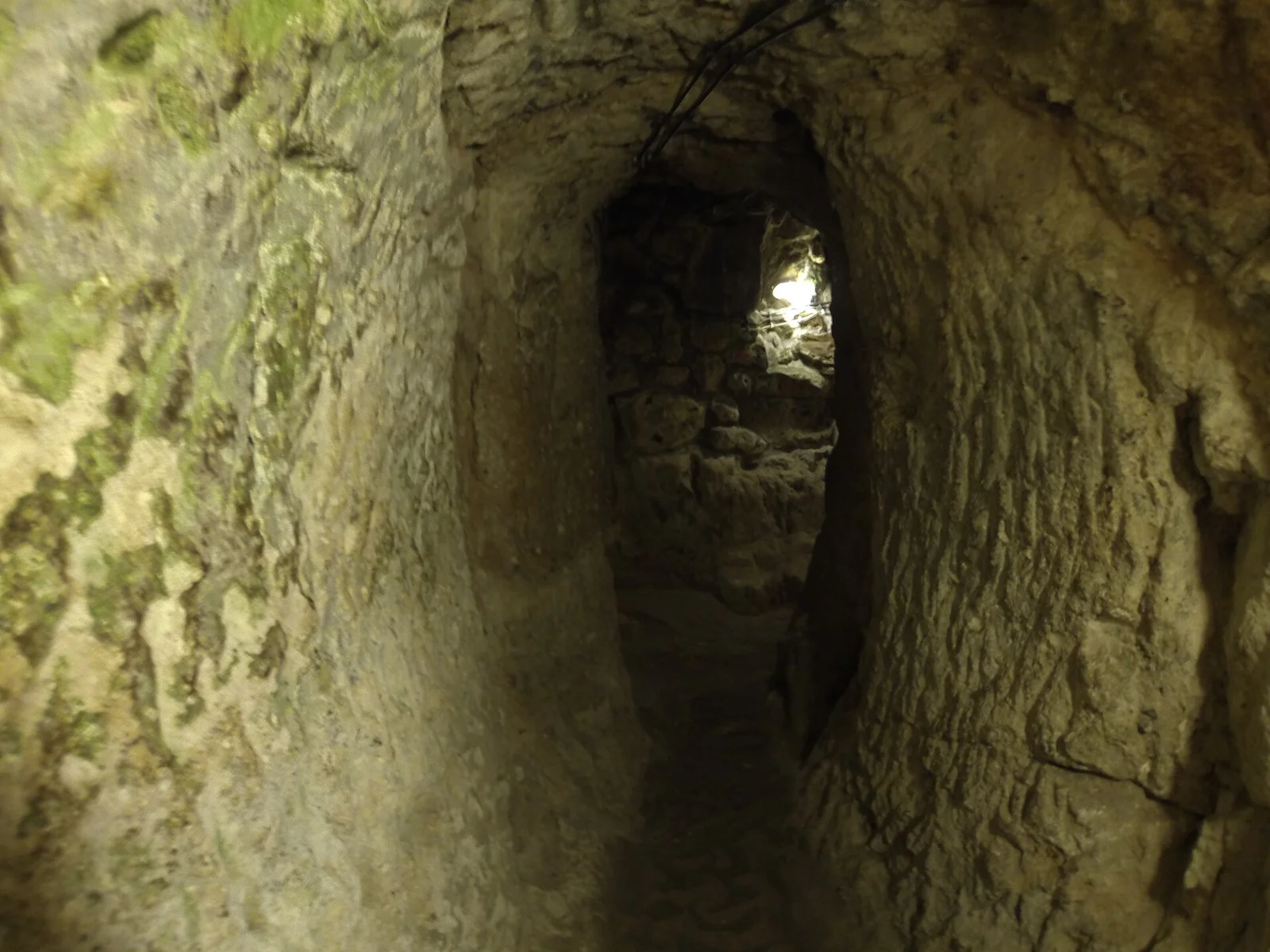
The museum says some room links are narrow. That affects the way a person moves, and also warns against imagining a large open hall across every level. A broad room photo gives only part of the layout. The approach may be much smaller than the space beyond it.
If you see a blocked opening, do not treat it as a place to test the system. A barrier may keep visitors on the managed path or protect a feature. The museum's current signs determine access. An old source drawing cannot give permission to pass it.
What field measurements are documented?
The Japanese research-project record describes a Derinkuyu study of the site's layout, rock and site conditions. It says the researchers surveyed the spaces and built a geometric model. That is evidence that the site has been studied, not a reason to infer every number from a visitor summary.
The public project abstract is a high-level account. It does not give a room-by-room current air table. We do not turn its broad conclusions into an one visitor's medical or access advice. The full method and conditions would be needed for a more precise engineering claim.
Mehmet Özgür Mutlu's geological thesis examines room walls and cracks in the rock. That is another physical study with its own purpose. A measurement of a wall or rock layer is not automatically a measurement of ventilation or drinking water.
The limit of a published shaft count
An exact count needs a defined network and survey. The count should state whether it covers all shafts, only air shafts, or only the studied area. A total from one source should not silently become a count of open visitor features today.
This page does not print a fixed shaft total from untraced travel accounts. The useful statement is the presence and function of the surface links described by the museum. More exact dimensions or counts need a clear measured record and an explanation of what it includes.
Air shafts versus wells
The official sources discuss a shaft that is also used as a well. That overlap is part of the museum's account. But it does not mean every air shaft is a water source. A plan or caption needs to identify the feature before either label is assigned.
Similarly, a well's lower endpoint is not the same as the depth of occupied rooms. The brochure uses different endpoints when discussing depth. A single headline figure can hide the difference between room levels and a shaft that extends below them.
No current water-quality claim follows from a historic well label. Do not treat water visible in a photo as drinking water. This guide explains the source account; it does not test the site's water or certify the route's current air conditions.
What the explanation can infer
The broad inference is practical: a refuge needs links for air as well as places for people and stores. The museum lists those parts together. Their relationship helps explain why a shaft is more than a visual curiosity in the underground rooms.
The next step, a precise shelter space calculation, needs much more. It would require a defined volume, air-flow conditions and use assumptions. We do not fill missing inputs with a guessed figure simply to match a popular claim that the city held a fixed crowd.
The same care applies to claims of constant temperature. A casual visitor's impression or one reading is not a complete annual record for every room. We do not promise one temperature throughout the site or say the conditions suit every person.
Read the shaft photograph
The creator identifies the gallery image below the article as a ventilation well at Derinkuyu. The visible opening helps explain a shaft's vertical form. The capture date belongs to the photograph, while the source-check date belongs to this guide.
Modern lighting and fittings in the image are separate from the carved space. The picture is not a measured plan and does not show all links. Use it with the museum account, not as proof of a full ancient air model.
Frequently asked questions
Does a shaft prove a fixed number of people could stay?
No. Its presence shows a connection described by the museum. But shelter space needs more measurements and assumptions. Room space, supplies and length of stay matter alongside air. A public research summary is not a current personal-suitability guarantee. This page does not derive a fixed crowd limit from a shaft photograph.
Are wells and air shafts always separate?
Not in every source description. The museum discusses an overlapping use for a named shaft. That does not identify all shafts as wells. Read the clear source label and location. A photograph of one opening cannot show the complete water network, its current quality or every historic use.
Continue planning your visit
Verdict on the Derinkuyu ventilation system
The Derinkuyu ventilation system is best explained by its surface-linked shafts and linked rooms. Keep that source-backed account separate from exact flow, temperature and shelter space claims that need further data. Sources checked and editorial update: 14 October 2026.
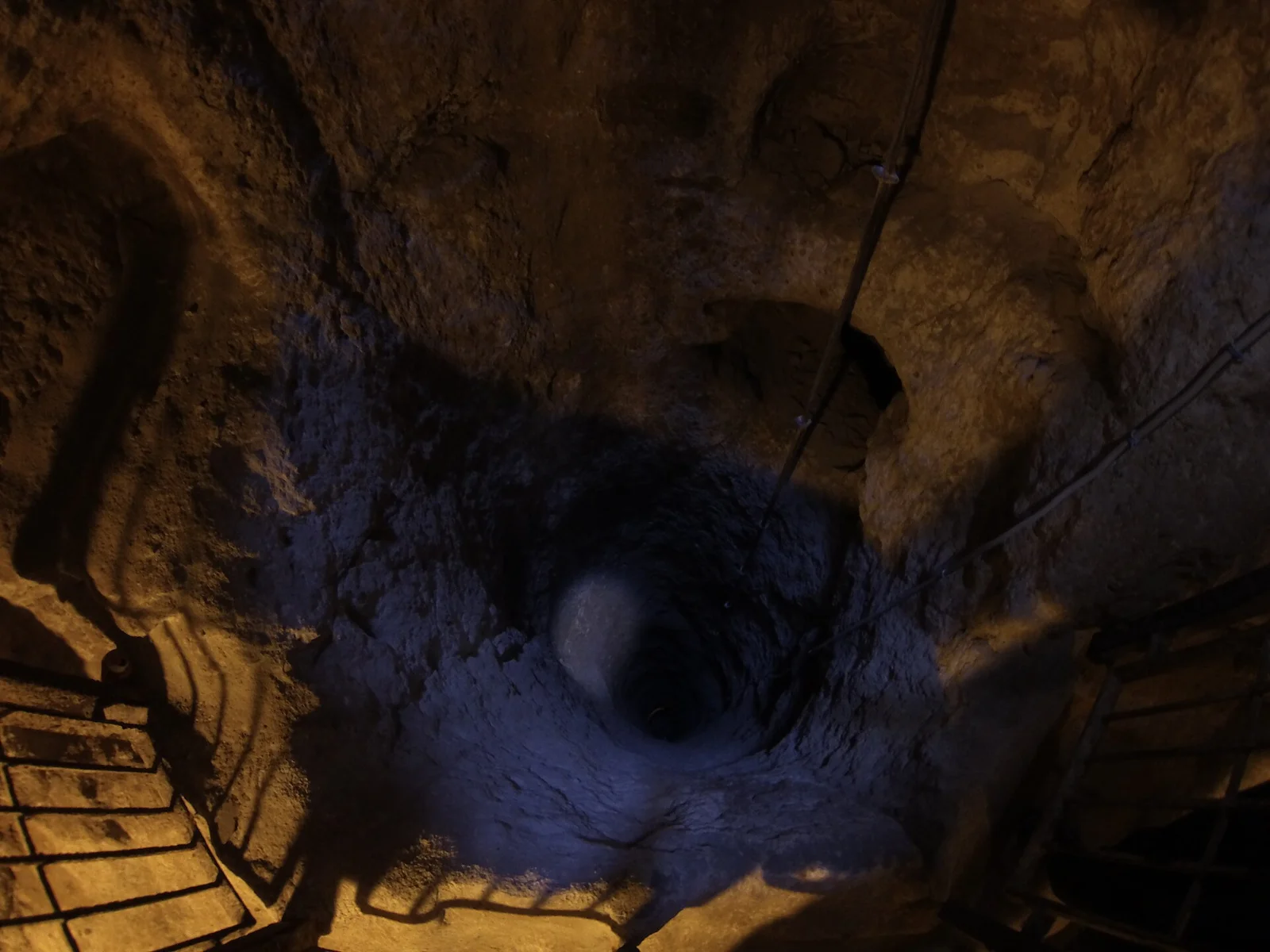
2014-02-06 10:54:21 · The creator identifies a ventilation well; the photo does not show its full water system. Resized and converted to WebP.
Nevit Dilmen · CC BY-SA 3.0 (https://creativecommons.org/licenses/by-sa/3.0) · Image source
